Built for service businesses that need to be trusted fast.
Stop looking smaller than the work you do.
Valcrest modernizes websites, local visibility, and trust systems for businesses that rely on calls, bookings, and real customers.
Modernized presence
A business that feels trustworthy before the first call.
Real site presence, framed for trust.
The problem
Good businesses lose people when their presence feels unfinished.
01
They find you online.
02
They judge what they see.
03
They call someone else.
The pieces that make a business feel real.
Not random marketing. The visible parts people use to decide if they trust you.
Web Presence
Modern sites that make the business feel clear, current, and easy to contact.
Local Visibility
Search, Google, and local pages shaped so people understand who you are fast.
Trust Systems
Reviews, photos, calls-to-action, forms, and follow-up paths arranged with intent.
Selected work
Live project
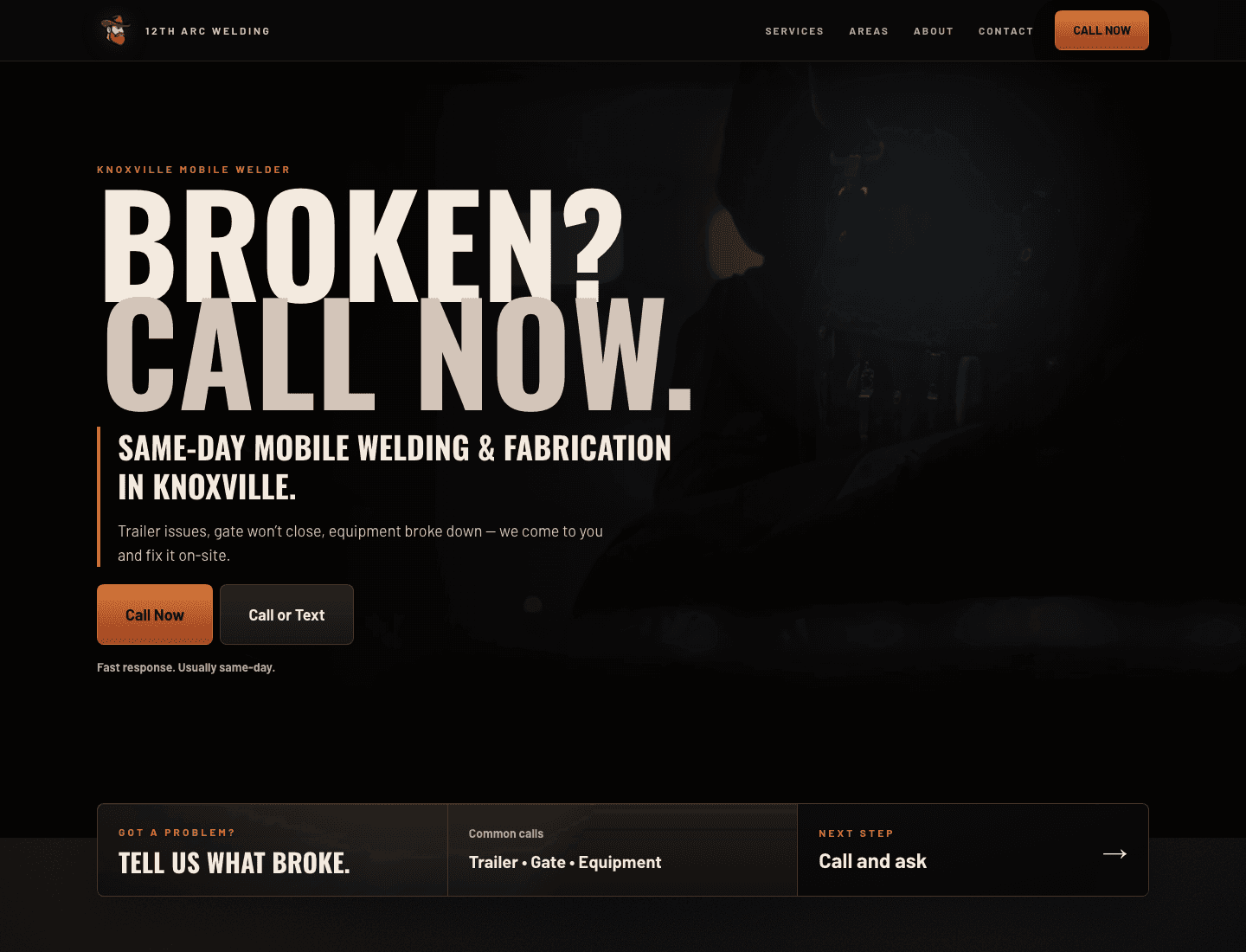
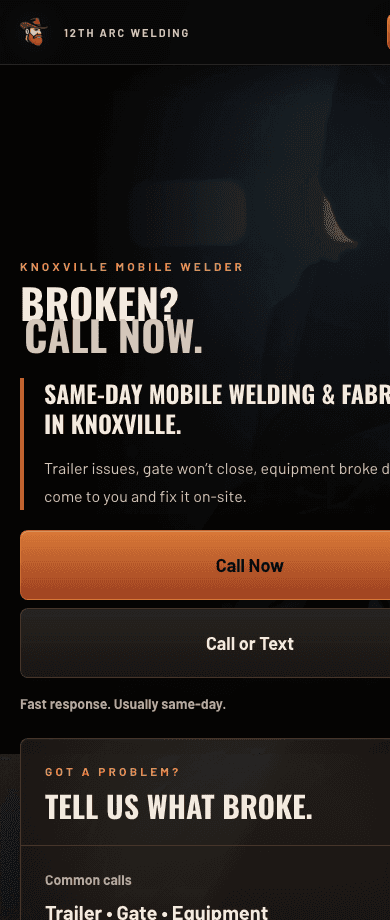
Skilled mobile work finally feels trustworthy before the first call.
12th Arc Welding
An urgent, operational web presence for mobile welding, repairs, and on-site fabrication.
Live project
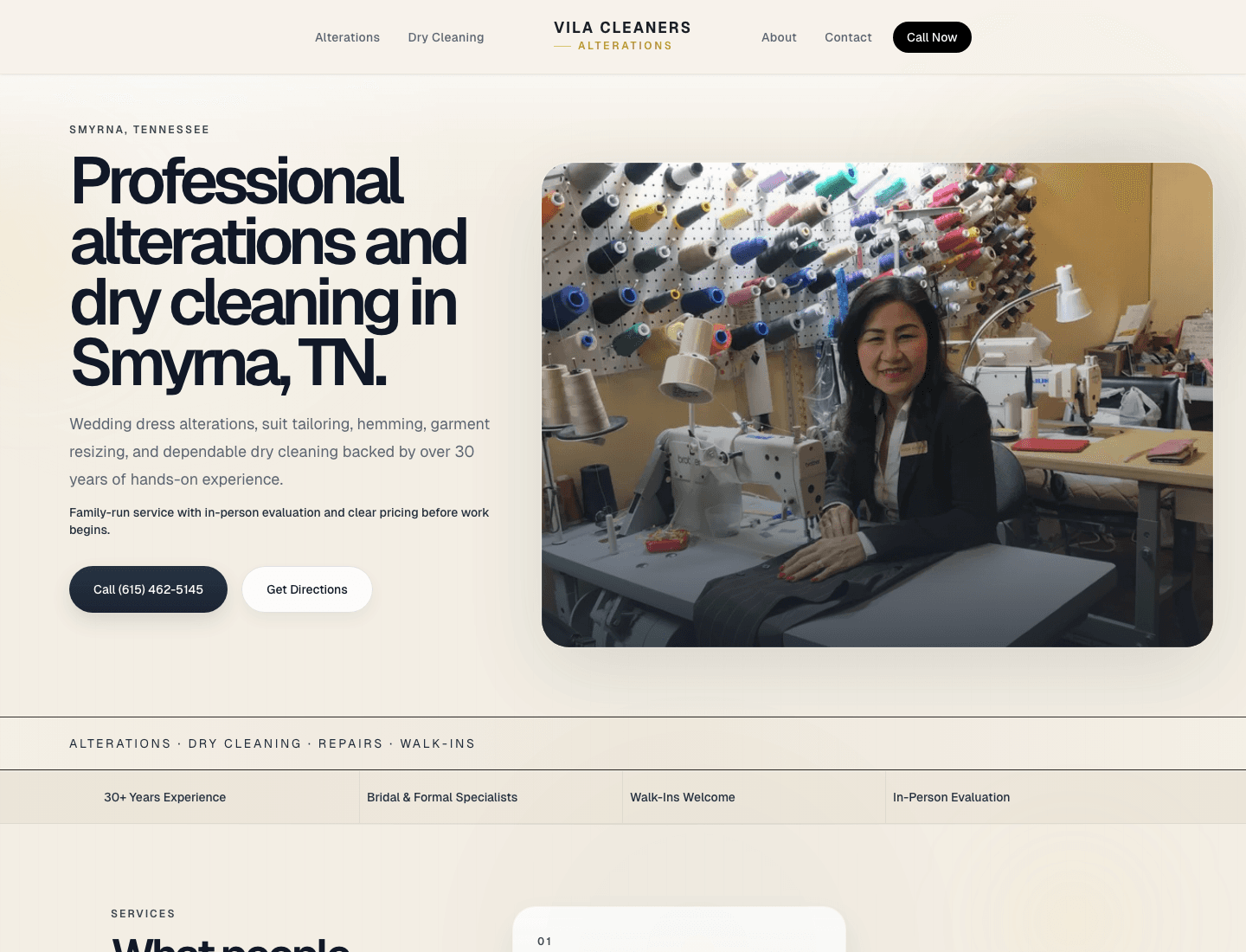
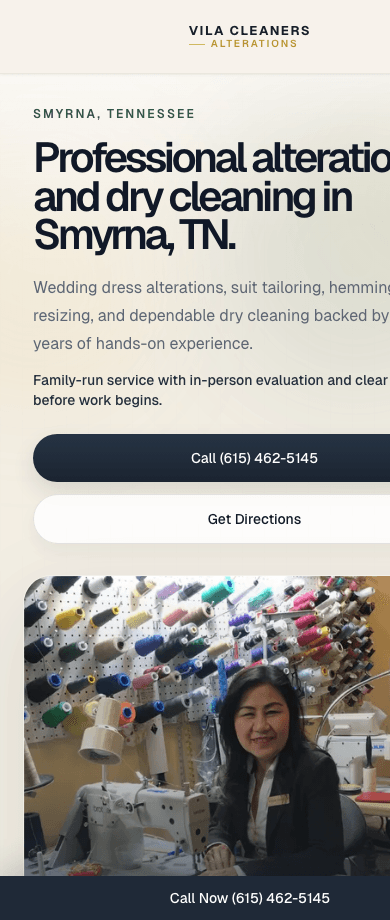
A trusted local shop becomes easier to recognize, understand, and visit.
Vila Cleaners & Alterations
A refined local presence for alterations, garment care, and long-running neighborhood trust.
We do not make businesses look bigger. We make them look believable.
Most local businesses already do good work. The problem is that their website, photos, pages, reviews, and contact path do not always show it clearly.
Valcrest rebuilds the visible layer around the business so people understand, trust, and reach out faster.
Built for businesses where the work is real and trust matters.
Start here